
Newsletter Article
From Exhibition to Impact: Farmers Engage with IoT-Powered Solutions for Smarter Agriculture.
Read the full update below, including the featured image and complete article content.
Published newsletter
Article Details
The AdEMNEA Project moved beyond simply showcasing agricultural technologies to creating opportunities for farmers, agricultural professionals and other stakeholders to engage directly with the Smart-Bee hive and the Bee-Sight Application developed to enhance Bee keeping as a sector in Uganda.
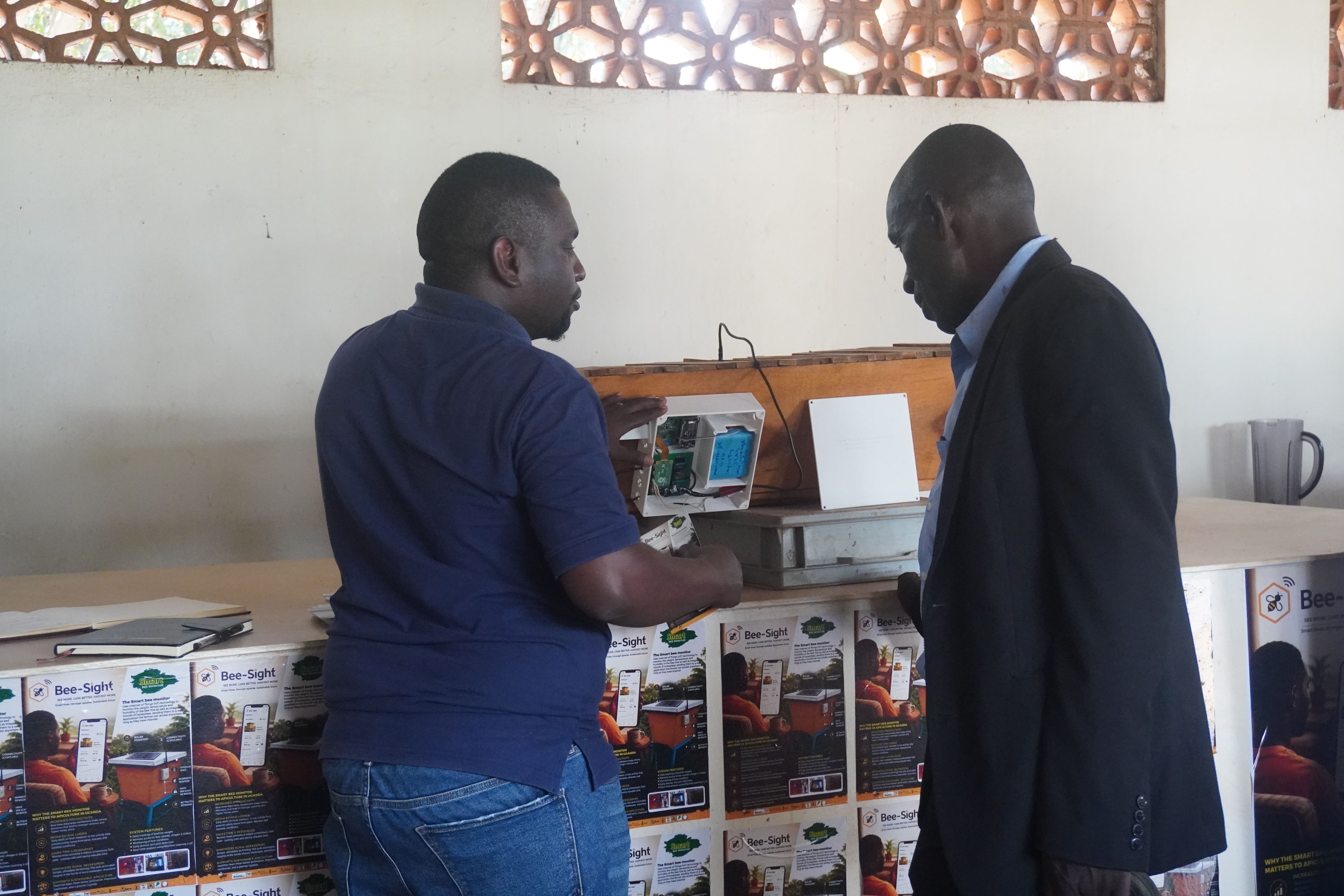 Fig 1; Project Communications Lead - Peter Alvin Mukisa demonstrates how the various sensors operate in a Smart-Bee Hive as a Bee Farmer observes closely.
Throughout the exhibition, farmers interacted with the technologies, explored how they could install the Smart-Bee hive into their apiaries, and shared their experiences and perspectives with the project team. Agricultural professionals and other stakeholders also asked questions, explored potential applications of IoT in agriculture, and provided valuable feedback on the relevance and usability of the innovations.
These interactions provided the AdEMNEA team with practical insights into what works, what could be improved, and where there may be opportunities for wider adoption and scale-up. The exhibition also opened conversations around potential partnerships and future collaboration with stakeholders interested in applying digital technologies to strengthen agricultural productivity and decision-making.
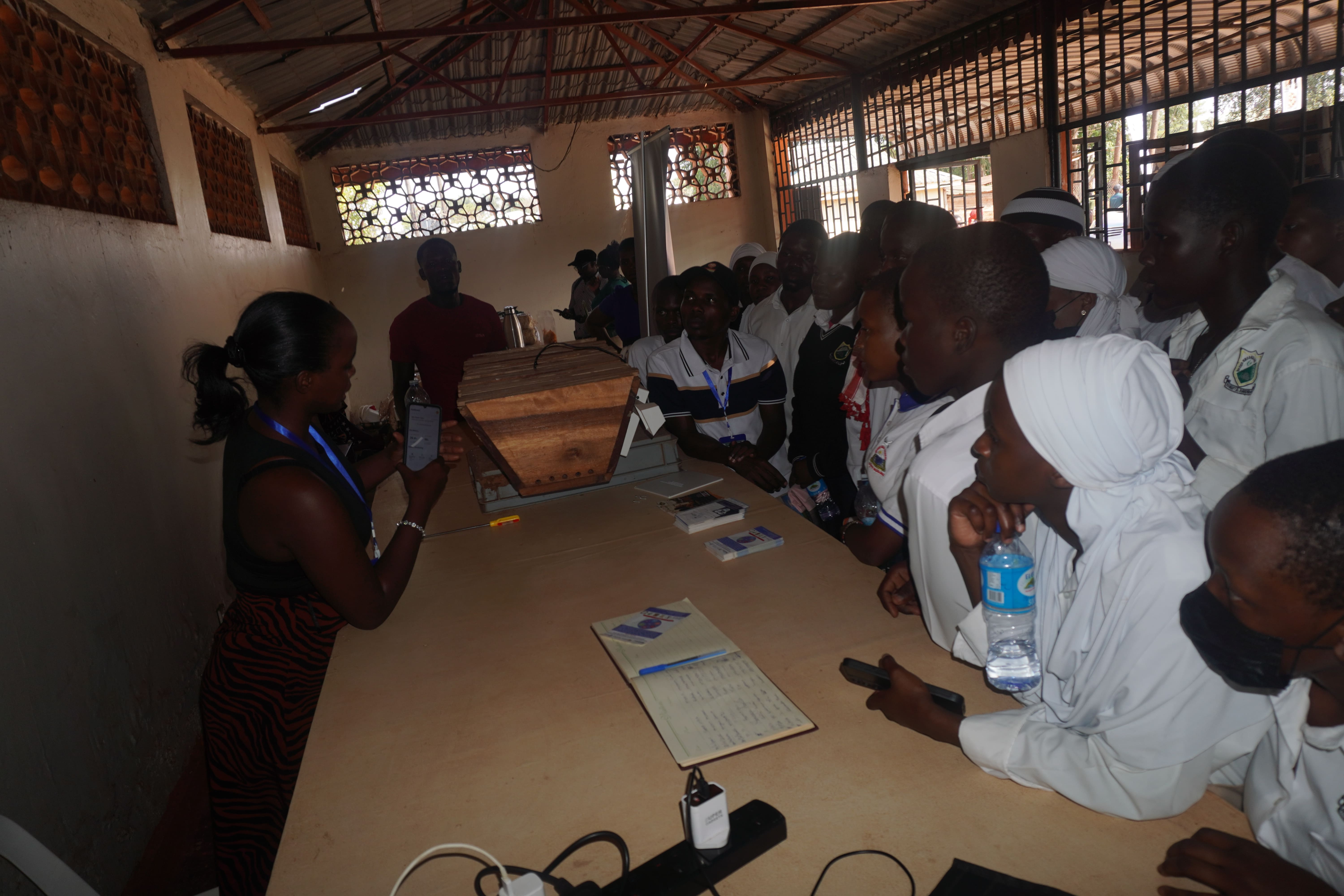 Fig 2; Project Intern, Benita illustrates the Bee-Sight functionalities as secondary school students intertact with the system.
For AdEMNEA, the Jinja Agricultural Show was therefore more than an exhibition, it was an opportunity to put innovation in the hands of potential users, listen to their needs, and use their feedback to inform the future development and deployment of agricultural technologies.
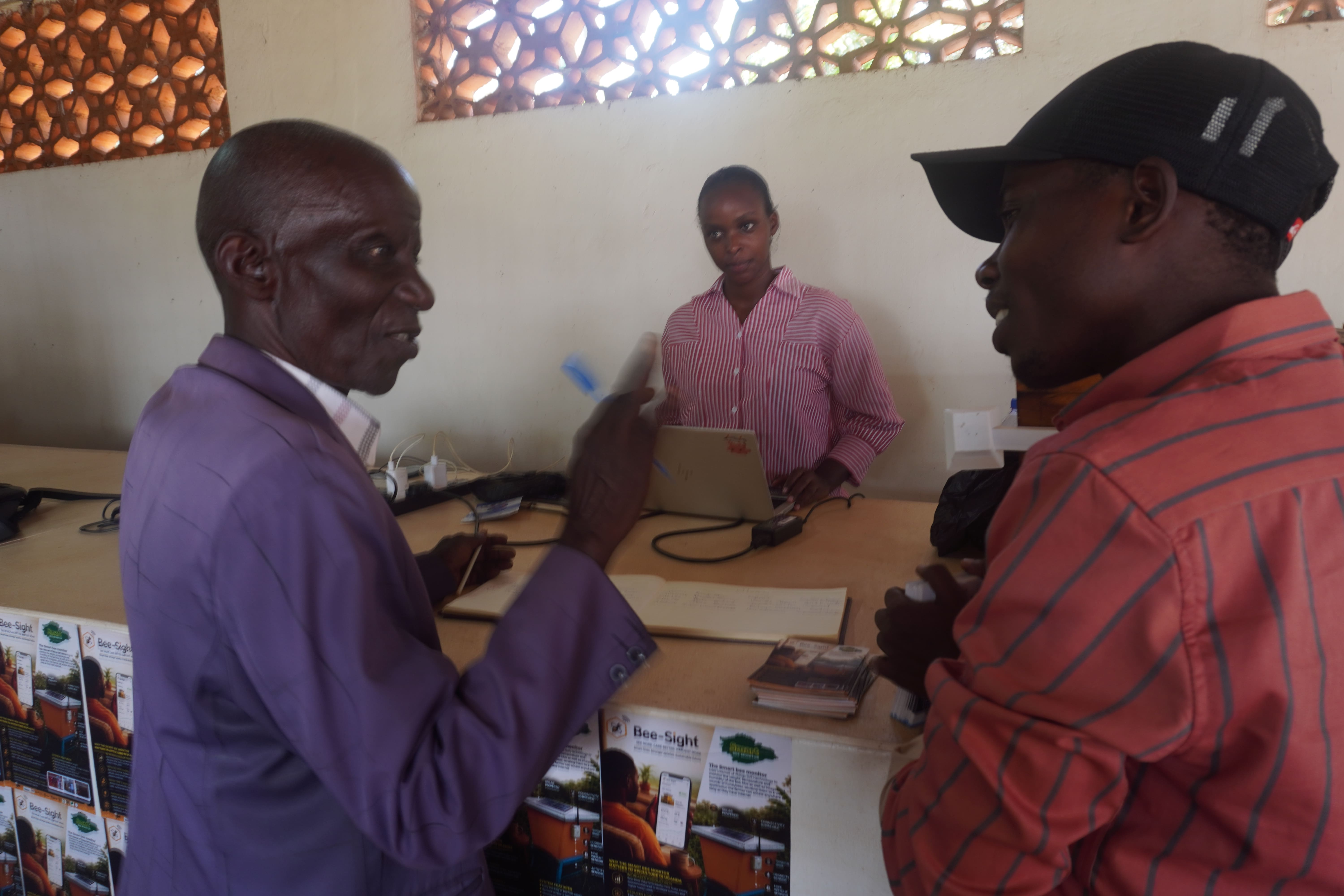 Fig 3; Project Intern Robert Abasa engages a traditional Bee Farmer enthused by the new technologies in Apiculture.
The experience reinforces an important principle at the heart of the project: ‘technology has greater impact when it is developed with users, tested in real-world contexts, and continuously shaped by the people it is intended to serve.’