
Published newsletter
Article Details
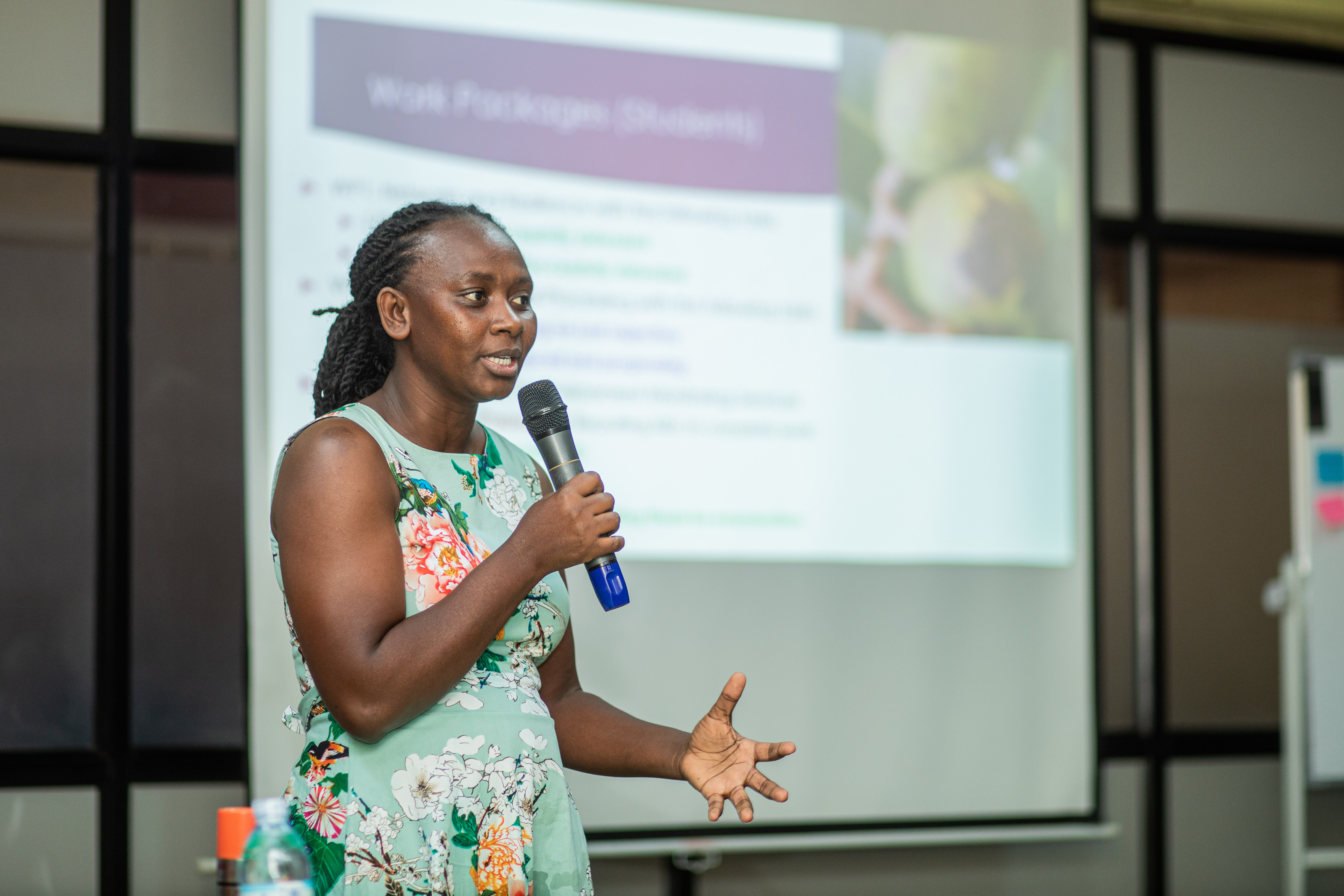
Dr Mary Nsabagwa, the Co-PI of the ADEMNIA project and co-Head of the IoT Research and Applications Lab at Makerere University, welcomed participants and stakeholders, including mango farmers, retired ICT experts, hobbyist beekeepers, and representatives from partner universities and organisations. She expressed gratitude to contributors from DIT Tanzania, the University of Juba, and local journalists for helping disseminate information to communities.
The AdEMNIA project, (Adaptive Environment Monitoring Networks for East Africa) was established to address critical challenges in mango farming, particularly the destructive Bactrocera dorsalis fruit fly and declining bee populations. In Uganda, fruit flies can cause 30 -100% yield losses, threatening production and livelihoods. Simultaneously, declining bee populations, driven by land-use changes, pesticide use, and climate change, endanger pollination and food security.
To tackle these issues, AdEMNIA combines ICT with ecological monitoring. Smart traps and beehive monitoring systems collect real-time data on fruit fly activity and bee health, transmitting information directly to farmers’ smartphones. This adaptive network allows farmers to detect infestations early, implement timely interventions, and make informed decisions on pest control and crop management.
The project is structured around four work packages:
- Networks and Resilience – ensuring reliable data transmission from traps and hives.
- Sensors and Signal Processing – monitoring environmental parameters and the wellbeing of bees.
- Machine Learning and Analytics – analysing data to identify insect species, count populations, and detect crop damage.
- Project Administration and Community Engagement – overseeing operations, reporting, and stakeholder communication.
ADEMNIA emphasises research capacity building, engaging PhD and master’s students in hands-on projects. Students contribute to developing predictive analytics, smart agriculture models, and data sets for fruit fly damage detection. Internship programmes have trained over 50 students, enhancing employability and scientific skills.
Community engagement is central to ADEMNIA’s approach. Workshops, training sessions, and public demonstrations introduce farmers and extension workers to smart traps, smart hives, and data advisory tools. These initiatives also foster gender balance, encourage young people in science, and build awareness of sustainable farming practices.
The project has already achieved significant milestones:
- Deployment of smart hives and traps with plans to scale further.
- Collection of mango orchard data sets for AI-driven damage assessment.
- Development of resilient, adaptive networks for data transmission.
- Strengthening laboratory infrastructure, collaborations, and institutional capacity.
- Empowering farmers with actionable climate and pest management intelligence.
Dr Nsabagwa acknowledged the support of funding partners such as NORAD, Makerere University, DIT, the University of Juba, NARO, and local communities, emphasising that their collaboration is vital for the project’s success and future scalability.
In conclusion, ADEMNIA addresses critical threats to food security by protecting pollinators and mitigating crop-destroying pests, while fostering scientific research, community engagement, and technology-driven agriculture in East Africa.