
Published newsletter
Article Details
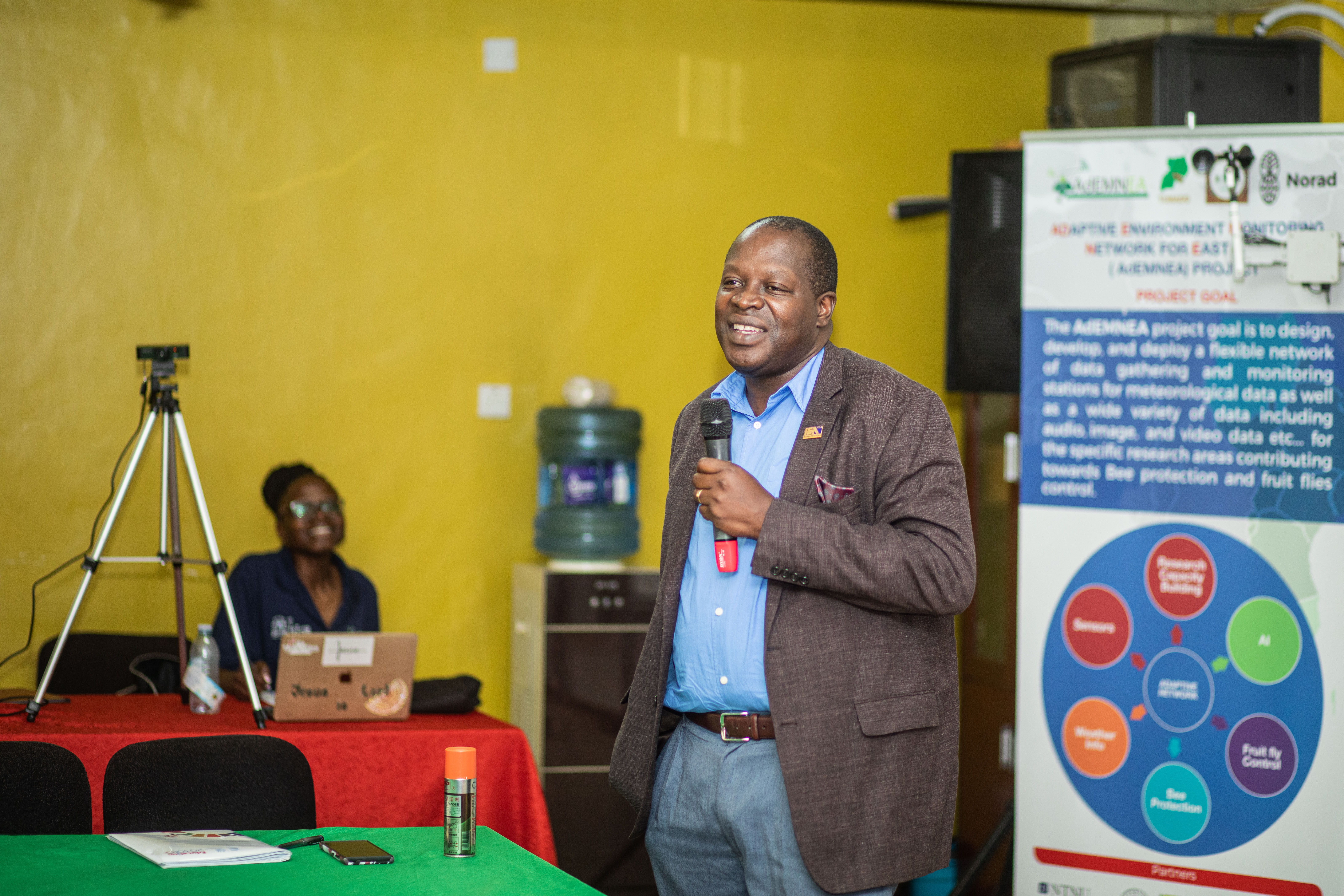
In his inspiring opening remarks at the AdEMNEA Annual General Meeting, Prof. Tonny Oyana challenged participants to embrace creativity in science by “colouring outside the lines.” He reminded researchers that while science often demands discipline and structure, true innovation emerges from original thinking and the courage to explore beyond convention. Drawing on examples from childhood learning and Isaac Newton’s ground-breaking discoveries, Prof. Oyana encouraged scientists to blend art with science, allowing curiosity to guide discovery. Below are excerpts from his remarks:
“Creativity is not just science; it is art.” When we dare to colour outside the lines, we open the door to new ideas and breakthroughs that can transform our world. We are doing science, and I hope that through this project, we can become a true diversity of science. I want to share a simple idea that I love deeply, one that I hope you will also appreciate: the value of colouring outside the lines. In science, we are often trained to colour neatly within the lines - to follow instructions, observe procedures, and stick to formulas. That is the structure of scientific work: careful, methodical, and disciplined. But sometimes, true discovery happens when we dare to colour outside the lines.
Think about babies when they are first given crayons. You give them a colouring sheet and tell them, “Stay inside the lines.” Yet, they happily colour over the lines, again and again, without worry or hesitation. Their freedom from boundaries is what makes their art creative and fresh. When I was in school, our mathematics teacher once asked us to bring 10 counting sticks to class. They had to be exactly cut and neatly arranged. Those who didn’t follow the instructions precisely were told to redo them. I remember wondering then, could I colour outside the lines? But the system didn’t allow it. From a young age, we are taught conformity, not creativity.Yet creativity, the courage to think differently, is what fuels true innovation. Creativity is not just science; it is art. And research, at its best, blends both.
Some of the greatest scientists in history were willing to colour outside the lines. Take Isaac Newton, for example. When he wrote his laws of motion, reviewers criticised his manuscript harshly because it didn’t fit within the conventions of science at the time. Newton was so frustrated that he locked himself away for six months, refining his work until it fit “within the lines.” But the truth is, his genius came from first colouring outside them. His original thinking laid the foundation for centuries of scientific progress.
So, as we continue our work, let us remember this: while structure and process are important, originality and curiosity are equally vital. True research doesn’t always follow the beaten path. Sometimes, it takes a bit of courage, and even a few messy lines, to uncover something truly new. And as I like to say, in today’s digital world, even our images can take many forms - JPEG, GIF, PDF - each storing information differently. What matters is not the format, but the imagination behind what we create. Let us, therefore, be scientists who are not afraid to colour outside the lines, for that is where creativity, innovation, and transformation truly begin.
Thank you.