
Published newsletter
Article Details
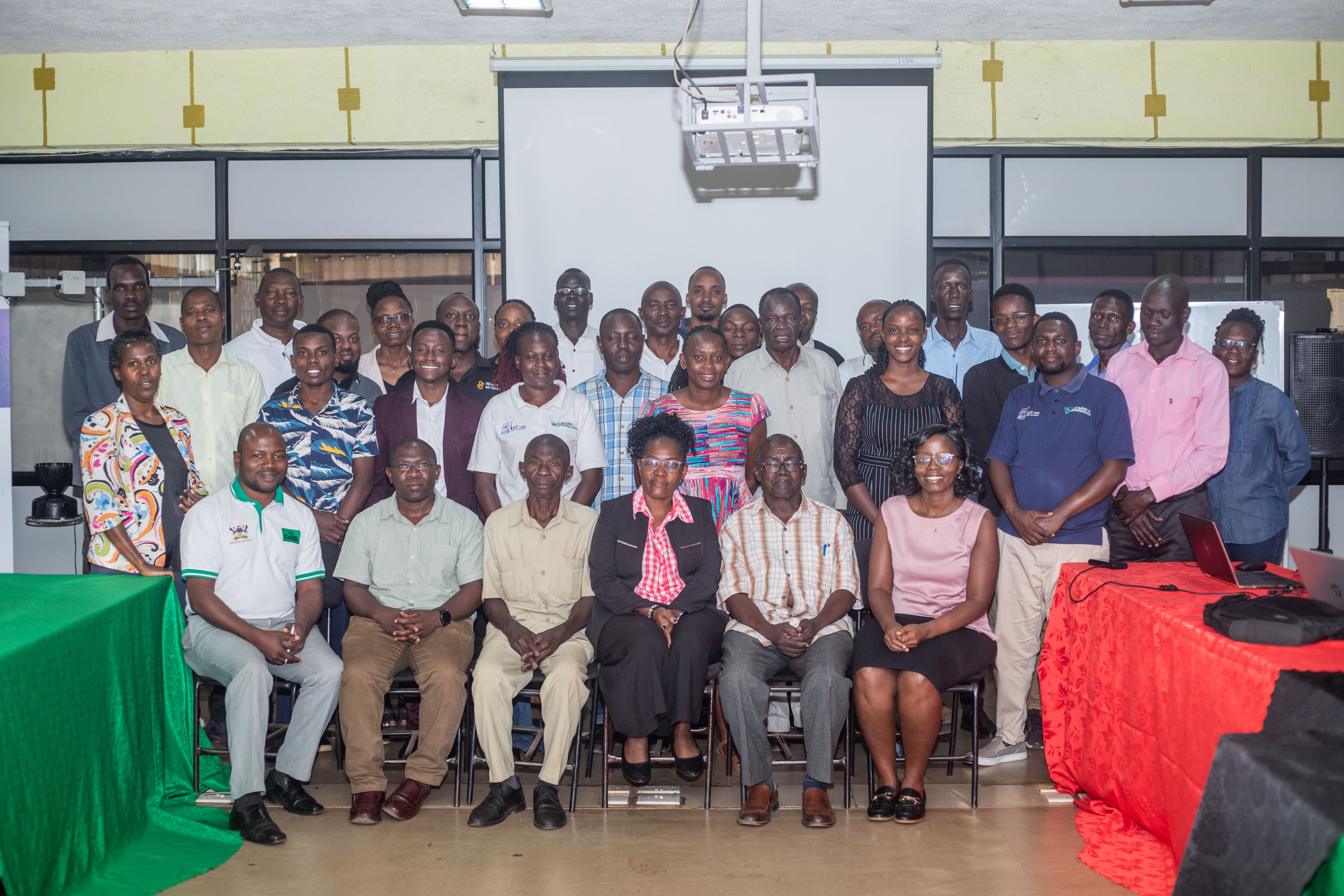
The Adaptive Environmental Monitoring Networks for East Africa (AdEMNEA) project, funded by Norad under the NORHED II programme, held its Annual General Meeting at Makerere University, bringing together researchers, partners and farmers from across the region. The project is jointly implemented by Makerere University, the Norwegian University of Science and Technology, Dar es Salaam Institute of Technology and the University of Juba.
The meeting, hosted at the Internet of Things Research and Applications Lab, highlighted progress in developing low-cost technologies for environmental monitoring, with particular focus on bees and fruit flies. These innovations aim to support farmers, strengthen food security and advance scientific understanding of climate-affected ecosystems.
Dr Julian Sansa Otim, the project lead, welcomed the Chief Guest, Professor Margie Kigozi, and representatives from partner institutions. She emphasised the project’s multidisciplinary nature, drawing expertise from computing, agriculture, veterinary medicine, and engineering. She noted that AdEMNEA was moving beyond theory, producing tangible outputs that directly support farmers.
A key highlight was a panel showcasing two flagship innovations: the Smart Bee Monitor developed by PhD researcher Ms Agatha Turyagyenda, and the electronic fruit fly trap designed by PhD candidate Florence Lello from the Dar es Salaam Institute of Technology.
Ms Turyagyenda explained that the Smart Bee Monitor collects real-time data from a hive, temperature, humidity, carbon dioxide, sound, vibration and video, relaying it to a mobile phone or computer. This allows farmers to monitor hive conditions remotely, identify pests and diseases early, track queen presence and even determine optimal honey-harvest periods, which are increasingly unpredictable due to climate change.
Practical feedback from the farming community remains an essential part of the project. Mr Kaddu, a veteran beekeeper and equipment manufacturer, shared his experience hosting field tests of the Smart Bee Monitor. While he applauded the innovation, he also noted that bees reacted to some early prototypes, possibly due to electrical currents, which may have reduced honey yields. His insights are now informing improved versions, including timed, low-current systems powered by safer alternatives.
Such candid dialogue is precisely what AdEMNEA aims to promote: research that is grounded in real-world experience and shaped by the needs of local stakeholders. With strengthened partnerships, regional collaboration and farmer engagement, the project continues to chart a path towards sustainable, technology-supported environmental monitoring for East Africa.